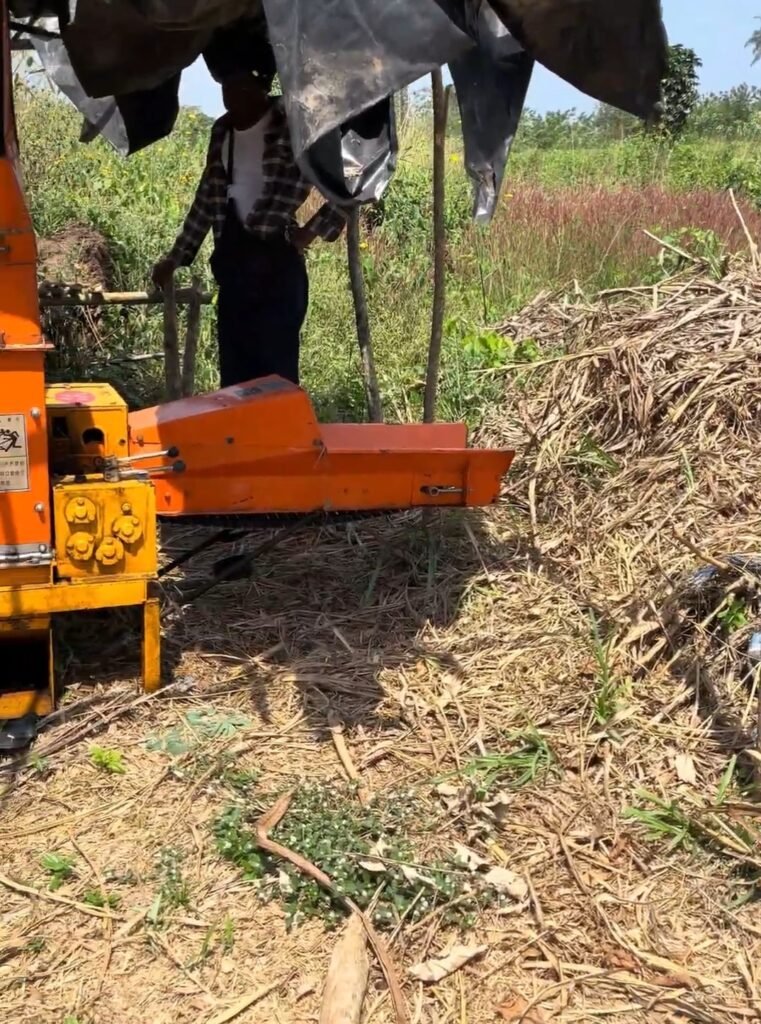
The way animals eat shapes how they grow. At Village Farms, we produce our own silage to ensure our livestock get consistent, nutrient-rich feed year-round.
Silage is preserved animal feed made from fresh grasses and crops while they’re still green. Storing it properly keeps the nutrients intact and the feed fresh for longer, which matters most when the dry season hits and fresh forage dries out.
What Goes Into Our Silage
We don’t buy silage. We grow it. At our silage farm in Majeroku, Osun State, we plant the forage materials ourselves and handle every step of production on-site. Our silage comes from a mix of brewery waste, shredded elephant grass, napier grass, sorghum plant, maize plant, molasses, and natural additives like agunmaniye and moringa leaf. This combination delivers the proteins, fibres, vitamins, and minerals our livestock need to stay healthy and productive.
How We Produce It
Our silage farm in Majeroku sits surrounded by lush greenery and open land. Fresh grass grows across the fields, and we have the machines to turn it into feed that is easy for animals to digest. Harvesting happens when the crops are still nutrient-dense. From there, we chop, mix, and store everything. The equipment and space at Majeroku let us produce silage at scale without compromising quality.
What It Means for Our Animals
When animals eat well consistently, you can see it. They grow naturally, stay healthy, and remain active. That level of care shows in the livestock we raise and the confidence customers have in what we deliver.
Silage production keeps our animals fed properly through every season. It’s one of the ways we make sure quality doesn’t drop when conditions change.