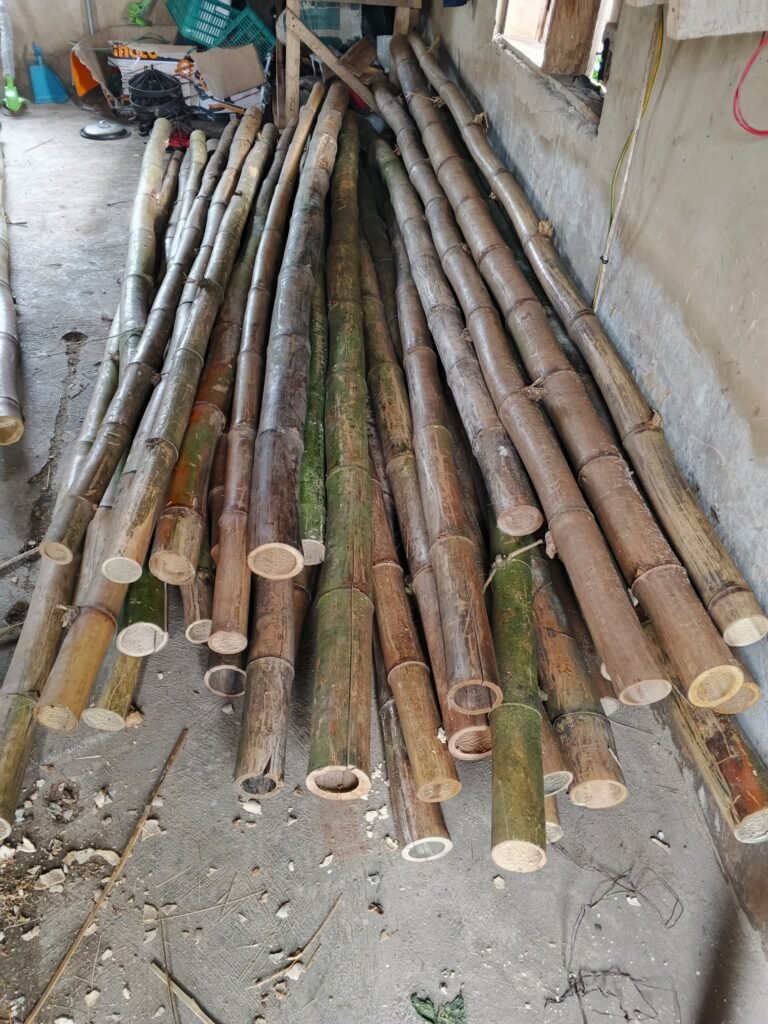
Bamboo’s potential is just beginning to unfold. Across industries worldwide, this versatile material is solving problems in energy production, textile manufacturing, water purification, and more. What we’re seeing now is only the start. As demand for sustainable materials grows, global awareness shifts towards renewable resources and climate-conscious solutions, bamboo is positioned to become one of the most valuable resources of the future.
Biofuel and Renewable Energy Production
Bamboo is emerging as a sustainable raw material for bioenergy across Asia, Africa, and South America. Through gasification, it produces clean gas whilst leaving charcoal as a natural byproduct. Through biochemical conversion, bamboo transforms into bioethanol and biogas. In Indonesia’s Mentawai islands, bamboo-based power plants now provide reliable electricity to over 1,250 households across three villages. A single bamboo pole can power a rural household for an entire month, making it a game-changer for communities without access to conventional energy sources.
Paper and Pulp Production
China produces over 2.4 million tonnes of bamboo pulp annually, most of it for household paper products. Bamboo fibres create strong, smooth pulp that rivals wood pulp in quality whilst costing 30% less to produce. Unlike trees that take decades to mature, bamboo is ready for harvest in three to five years. India meets 60–70% of its paper industry’s raw material needs through bamboo, and the global trend towards bamboo paper continues to gain momentum as an alternative to wood-based pulp.
Textile Production
Bamboo fibres transform into soft, breathable fabric used in clothing, bedding, and medical textiles. The fabric wicks moisture naturally, resists odours, and feels softer than cotton. Unlike conventional cotton, which requires heavy pesticide use, bamboo grows without chemical intervention. Sportswear brands favour it for activewear, whilst hospitals use bamboo textiles for wound dressings and sanitary products. The textile industry’s shift towards bamboo represents a cleaner, more sustainable alternative to chemical-intensive materials.
Sustainable Alternatives to Plastic
Bamboo is replacing single-use plastics in everyday products—toothbrushes, utensils, straws, and food storage containers. Unlike plastic, bamboo biodegrades naturally without leaving microplastics in soil or water. It’s lightweight, durable, and grows back within three to five years, making it a renewable resource that doesn’t deplete forests or rely on petroleum.
Water Purification
Bamboo charcoal acts as a natural water filter, removing chlorine, heavy metals, pesticides, and bacterial contaminants. When activated through high-temperature processing, bamboo charcoal develops millions of microscopic pores that trap pollutants whilst releasing beneficial minerals like calcium and magnesium back into the water. In rural communities across Asia, bamboo charcoal filters provide affordable, chemical-free water purification, purifying up to 30 litres per hour without electricity or complex maintenance.
A Resource for the Future
Bamboo grows faster than almost any other plant, reaches maturity in three to five years, and regenerates without replanting. It absorbs more carbon dioxide than hardwood trees and releases 30% more oxygen into the atmosphere. These qualities make it ideal for industries looking to reduce their environmental impact without sacrificing performance or quality.
At Village Farms, we’ve experienced firsthand how bamboo solves infrastructure challenges affordably and sustainably. But its potential reaches far beyond agriculture, quietly reshaping industries and offering solutions that work for people and the planet.